
Public domain · Source & rights ↗
The Pacific Clipper's long way home
Pearl Harbor stranded an American airliner, so the crew flew around the world.
Coming January 6
The decisions, sacrifices, and lives behind the war.
Pearl Harbor stranded an American airliner, so the crew flew around the world.

One Mustang pilot took on about thirty German fighters to protect the bombers.

Hollywood's biggest star died flying home from selling war bonds.

Allied troops landed behind German lines in Italy almost unopposed.

He climbed onto a burning tank destroyer and held off a German attack alone.

Army Rangers crawled across an open field to free 500 prisoners of war.

Four chaplains gave away their life jackets and went down with the ship, arms linked.

After six months of brutal fighting, the Japanese were gone from Guadalcanal.

Seventy thousand Marines were sent to take an island of volcanic ash.

There were actually two flag raisings on Iwo Jima that day.

The Navy needed builders who could fight, and they became the Seabees.

American soldiers raced across a bridge the Germans were trying to blow up.

Navy PT boats carried a general through enemy waters at night.

America's first war dogs were donated by families across the country.

Thousands of paratroopers dropped across the Rhine in a single day.

The last Japanese attack on Iwo Jima hit sleeping pilots and Seabees.

On Easter Sunday 1945, Americans walked ashore on Okinawa almost unopposed.

The biggest battleship ever built sailed on a one-way mission and never arrived.

Sixteen Army bombers took off from a Navy carrier that was never built for them.

American and Soviet soldiers met at a ruined bridge and cut Germany in two.

Weeks before D-Day, 749 Americans died in a rehearsal, and it was kept secret.

American soldiers opened the gates of the first Nazi concentration camp.

"We have done our best," the last radio message read, before Corregidor surrendered.

The first battle where the ships never saw each other.

In about five minutes, Navy dive bombers turned the Pacific War.

The general who helped win a world war gave a short speech about rebuilding it.

On June 6, 1944, more than 150,000 Allied troops crossed the Channel.

Weekend boaters became a volunteer force that helped guard America's coasts in WWII.

He was an Army dentist. He died behind a machine gun.

Paratroopers jumped into the dark, scattered across a hostile island.

At 5:29 a.m., the New Mexico desert briefly became brighter than the sun.

In seconds, a California pier vanished, and 320 men died.

In thick fog, a B-25 slammed into the world's tallest building.

After delivering the atomic bomb, they spent four days in shark-filled water.

They flew B-24 bombers at treetop height into Hitler's oil fields.

A Japanese destroyer cut his boat in half. Then Lt. Kennedy started swimming.

Eight months after Pearl Harbor, America finally went on offense.
Eight Nazi saboteurs landed on American beaches. One of them called the FBI.

Their target was hidden by clouds, and their fuel was running out.

A Hollywood star patented an idea that helps power today's wireless technology.

Joe Kennedy Jr. volunteered to fly a plane packed with explosives.

At 7 p.m., the president announced the words Americans had waited for.

In a single day, sixty American bombers fell from the sky.

On a battleship's deck, the deadliest war in history officially ended.

The Coast Guard's only Medal of Honor went to a 22-year-old signalman.

Two and a half years earlier he had promised: I shall return.

Destroyers charged battleships, knowing they probably would not come back.

The first U.S. warship sunk in World War II went down before America entered it.

Seventy-six hours on a coral island in the Pacific, and the hard lessons Marines carried to every beach after it.

America's first big punch at Hitler landed in North Africa.

They enlisted on one condition: that they serve together.

The tide was too low, and Marines had to wade 500 yards under fire.

More than 1,000 American soldiers died, and the Army kept it secret for decades.

Under the stands of a football field, the atomic age began.

At 7:55 on a Sunday morning, the first bombs fell.

Roosevelt crossed out world history and wrote one word: infamy.
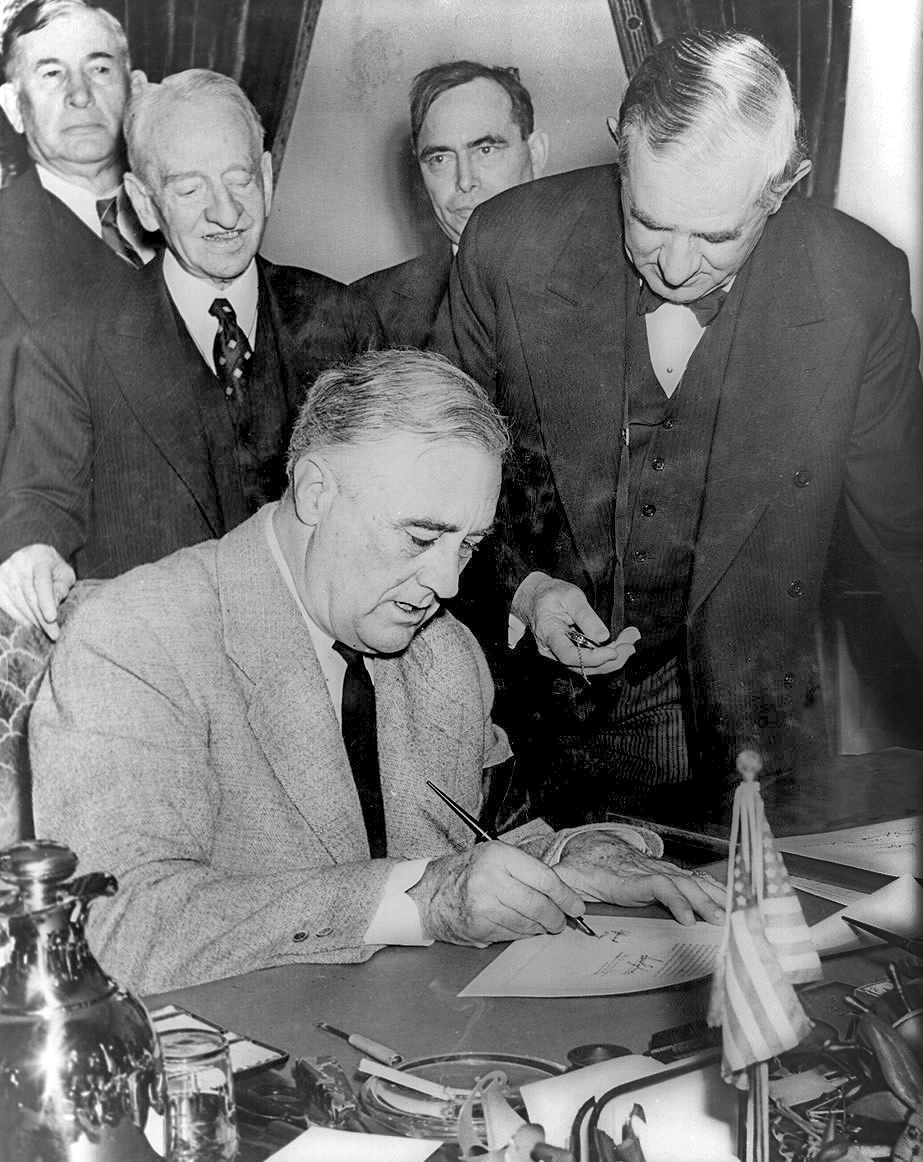
Hitler made a decision that sealed his fate. He declared war on America.

Four years before Pearl Harbor, Japanese planes sank an American gunboat.

In the snowy Ardennes, a quiet sector suddenly exploded.

The storm killed more sailors than many battles did.

The Germans asked the Americans at Bastogne to surrender. The answer: Nuts!

Five miles from France on Christmas Eve, more than 760 soldiers died.

A year before Pearl Harbor, Roosevelt told Americans their factories must arm freedom.