
Public domain · Source & rights ↗
The Navy SEALs are born
In 1962, the Navy quietly created two teams that would change modern warfare.
Coming January 1
Find a moment that changed a life, a country, or the way we see the world. Start with a date. Follow your curiosity.
Schedule subject to change. Every release is at 7:00 AM Eastern.
In 1962, the Navy quietly created two teams that would change modern warfare.

Washington was trapped against a river, and he slipped away in the night.

Washington rode within thirty yards of the British line to rally his men.

A Texas Ranger walked into a gun shop and saved Samuel Colt's career.

The most famous traitor in American history came back wearing a red coat.

Pearl Harbor stranded an American airliner, so the crew flew around the world.

America's first presidential election had no campaign and only one real candidate.

America's greatest victory of the War of 1812 came after the war was already over.

Three months before Fort Sumter, cadets fired at a ship flying the American flag.

A 47-page pamphlet by a recent immigrant talked America into independence.

One Mustang pilot took on about thirty German fighters to protect the bombers.

The morning was so warm that children walked to school without coats.

A man in the icy Potomac kept handing the rescue line to strangers.

One overheated rocket set off a chain of explosions on the world's first nuclear carrier.

A wave of molasses fifteen feet high rolled through the streets of Boston.

Hollywood's biggest star died flying home from selling war bonds.

Four words from a submarine changed undersea warfare forever.

A daredevil pilot landed on a warship using ropes and sandbags.

A U.S. Navy lieutenant claimed the discovery of a frozen continent.

After 444 days in captivity, 52 Americans were finally free.

For 77 days, 6,000 Marines held a hilltop base surrounded by North Vietnamese divisions.

Allied troops landed behind German lines in Italy almost unopposed.

A Navy spy ship was seized, and its crew spent eleven months as prisoners.

A carpenter spotted something shiny in a mill ditch and changed the West.

A young reporter beat Jules Verne's fictional record by eight days.

He climbed onto a burning tank destroyer and held off a German attack alone.

Three astronauts died in a fire during a routine test on the launch pad.

Two old lifesaving services merged and America got the Coast Guard.

One of the deadliest attacks on Native Americans in U.S. history is almost forgotten.

Army Rangers crawled across an open field to free 500 prisoners of war.

Four months after Sputnik, an Army rocket put America's first satellite in orbit.

Four college freshmen sat down at a lunch counter and refused to leave.

After the Spanish-American War, Congress finally made women nurses a permanent part of the Army.

Four chaplains gave away their life jackets and went down with the ship, arms linked.

Every single elector voted for George Washington, the only president ever chosen unanimously.

A nuclear bomb may still lie buried in the mud off Georgia.

Benjamin Franklin signed the treaty that may have won the Revolution.

A Navy captain flew away from the space shuttle with no tether at all.

A lost businessman in a London fog brought scouting to America.

After six months of brutal fighting, the Japanese were gone from Guadalcanal.
A U-2 pilot and a Soviet spy crossed paths on a Berlin bridge.

Lincoln told his neighbors he did not know when, or whether, he would return.

The first American POWs walked off a plane into freedom after years in Hanoi.

The earliest act ever honored with the Medal of Honor was an Army doctor's.

On Valentine's Day 1778, a foreign navy saluted the American flag for the first time.

A massive explosion in Havana Harbor killed 260 American sailors and led to war.

A 25-year-old lieutenant sailed into an enemy harbor to destroy a captured American ship.

A hand-cranked submarine became the first in history to sink a warship.

Newfoundland miners climbed down icy cliffs to save American sailors.

Seventy thousand Marines were sent to take an island of volcanic ash.

One Navy pilot stood between nine bombers and his aircraft carrier.

It took nearly forty years to build, and you can still see where construction stopped.

Sixteen white battleships sailed around the world to show America had arrived.

There were actually two flag raisings on Iwo Jima that day.

In four days, coalition armies drove Iraq's army out of Kuwait.

The first Black U.S. senator took the seat once held by Jefferson Davis.

A tunnel under Broadway, dug mostly at night, carried riders with a giant fan.

Patriots greased a bridge and won the Revolution's first big victory in the South.

A giant cannon exploded on a Navy warship with the president aboard.

She won Hollywood's top honor but had to sit at a separate table.

America invented the national park, and the Army guarded the first one.

An Air Force bomber flew around the world without landing once.

America went 155 years without an official national anthem.

A Navy ship with 306 aboard sailed into the Caribbean and vanished.

The Navy needed builders who could fight, and they became the Seabees.

No defender survived the final assault on the Alamo.

American soldiers raced across a bridge the Germans were trying to blow up.

The first American combat troops in Vietnam waded ashore to a welcome of flowers.

Two iron ships fought for hours, and every wooden navy became obsolete.

She led a Union raid that freed more than 700 people.

Navy PT boats carried a general through enemy waters at night.

Juliette Gordon Low gathered 18 girls in Savannah and started a movement.

America's first war dogs were donated by families across the country.

One machine changed the South, and not the way its inventor hoped.

With one pair of glasses, Washington stopped a military coup.

Thomas Jefferson signed the law that created the U.S. Military Academy.

Washington's cannons appeared overnight, and the British sailed away.

Two thieves dressed as police stole $500 million in art, and it's never been found.

A burning aircraft carrier lost 800 men and still made it home.

America's first aircraft carrier started life as a coal ship.
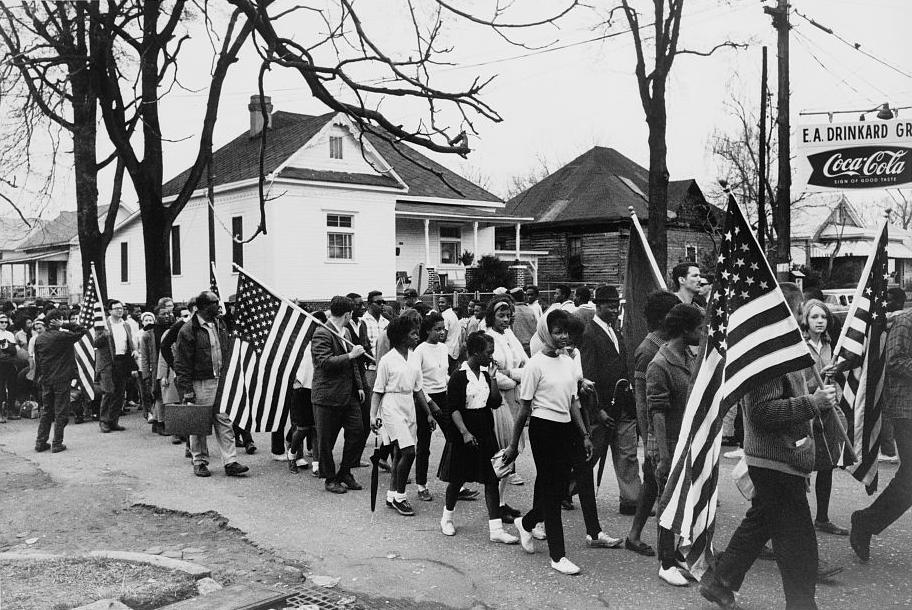
Soldiers and federalized Guardsmen protected marchers walking fifty miles for the vote.

A peace treaty made in 1621 lasted more than fifty years.

Patrick Henry's most famous words were spoken inside a church.

Thousands of paratroopers dropped across the Rhine in a single day.

The first Medals of Honor went to Union raiders who stole a train.

The last Japanese attack on Iwo Jima hit sleeping pilots and Seabees.

Pirates attacking American ships convinced Congress to build a navy.

A young Farragut watched his frigate fight to the end off Chile.

After more than eight years of combat, the last U.S. combat troops left Vietnam.

America bought Alaska for about two cents an acre.

A Navy commodore with black ships ended two centuries of Japanese isolation.

On Easter Sunday 1945, Americans walked ashore on Okinawa almost unopposed.

"The world must be made safe for democracy," the President told Congress.

For 18 months, mail crossed the West on horseback in about ten days.

The Navy's giant flying aircraft carrier went down in a storm off New Jersey.

George Washington waited three years before he ever said no to Congress.

At dawn, Confederates burst out of the woods onto Union soldiers cooking breakfast.

The biggest battleship ever built sailed on a one-way mission and never arrived.

Before the Civil War ended, the Senate voted to abolish slavery forever.

Two generals met in a farmhouse parlor and began to end the Civil War.

On a routine deep dive, the Navy's most advanced submarine never came back up.

For $150,000, the Navy bought a 54-foot boat that could hide underwater.

Union spies stole a train deep in Georgia, and earned the first Medals of Honor.

Two hundred thousand miles from Earth, an oxygen tank on Apollo 13 exploded.

A mine broke her keel, but the Sammy B crew refused to let her sink.

Before he broke baseball's color line, Jackie Robinson beat a court-martial.

A ship full of fertilizer blew up and leveled a Texas port town.

After four days in a crippled spacecraft, three astronauts splashed down alive.

Sixteen Army bombers took off from a Navy carrier that was never built for them.

Nobody knows who fired first, but by nightfall a war had begun.

Forty miles out in the Gulf, an oil rig exploded into a pillar of fire.

"Remember the Alamo!" A battle that lasted 18 minutes won Texas.

At noon a gun fired, and 50,000 people raced to claim free land.

In 1778, an American captain landed on the coast of England itself.

Eight Americans died in the Iranian desert trying to bring the hostages home.

American and Soviet soldiers met at a ruined bridge and cut Germany in two.

Twelve days after shooting Lincoln, the assassin was cornered in a burning barn.

Union soldiers who survived prison camps died in America's worst ship disaster.

Weeks before D-Day, 749 Americans died in a rehearsal, and it was kept secret.

American soldiers opened the gates of the first Nazi concentration camp.

In the final hours, Marines and helicopters lifted thousands from rooftops.

"You may fire when you are ready, Gridley." By lunchtime, a Spanish fleet was gone.

Stabbed, shot and hit by shrapnel, he kept going back for his men.

In Birmingham, the marchers facing fire hoses and police dogs were children.

Thirteen people boarded two buses in Washington, knowing they might not come back.

"Light this candle," Alan Shepard said, after hours of waiting on the pad.

"We have done our best," the last radio message read, before Corregidor surrendered.

A German torpedo sank a passenger liner in 18 minutes, killing 128 Americans.

The first battle where the ships never saw each other.

America's first political cartoon was a snake chopped into pieces.

At dawn, a few dozen men took a British fort without a fight.

A Boston captain crossed a deadly sandbar and named a river for his ship.

The worst American defeat of the Revolution came at Charleston, South Carolina.

The first women to officially serve in the Navy were called the Sacred Twenty.

They left without a map, because no map of where they were going existed.

The last names on the Vietnam Wall died two weeks after Saigon fell.

A president kept his job by a single vote in the Senate.

Two missiles struck a Navy frigate in the Persian Gulf, and 37 sailors died.
The woman who led the WASPs became the first woman faster than sound.

In 1780, the sun disappeared over New England at midday.

For a small fee and five years of work, Americans could claim 160 acres.

The "Angel of the Battlefield" brought the Red Cross to America.

On her way home, a Navy submarine vanished in the Atlantic with all 99 aboard.

"The old flag never touched the ground," he said, bleeding from his wounds.

A 24-year-old colonel climbed up to take down a flag, and never came back.

They met in secret, with the windows shut, in a hot Philadelphia summer.

A peacetime morning off Rhode Island became one of the Navy's deadliest days.

Eight years before Lindbergh, a Navy crew flew across the Atlantic first.

A 22-year-old named George Washington fired shots that started a world war.

The last of the 13 states joined the Union by just two votes.

The first national Memorial Day was a day for flowers on soldiers' graves.

A rich men's fishing club dam broke, and a wall of water hit Johnstown.

A dying captain's last order became the motto of the U.S. Navy.
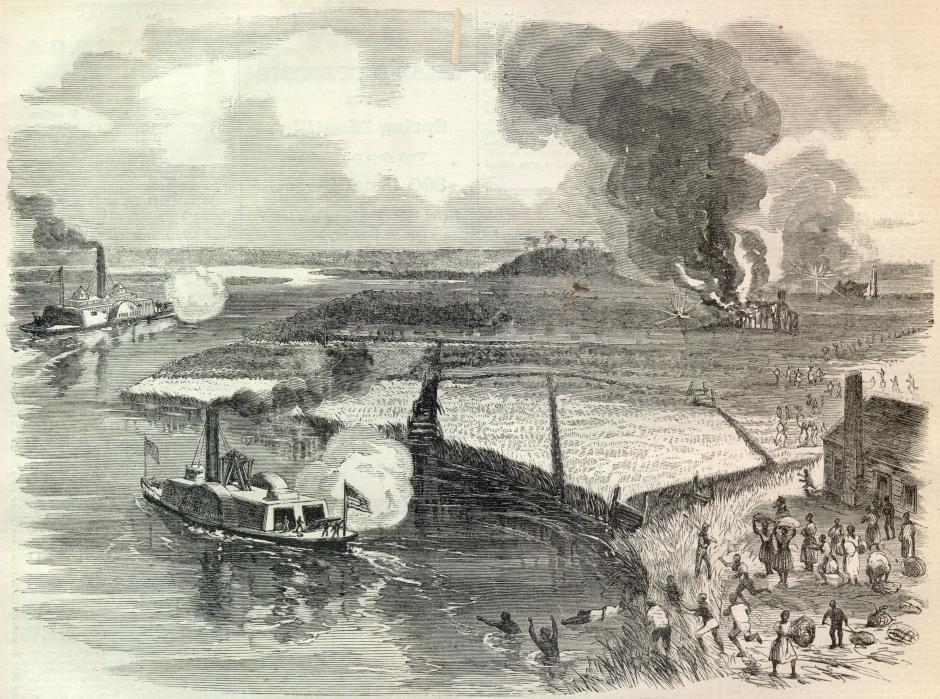
Harriet Tubman led Union gunboats up a river and freed more than 700 people.

"I'm coming back in, and it's the saddest moment of my life."

In about five minutes, Navy dive bombers turned the Pacific War.

The general who helped win a world war gave a short speech about rebuilding it.

On June 6, 1944, more than 150,000 Allied troops crossed the Channel.

Before the Declaration, there was a single sentence: "these United Colonies are... free."

In international waters, an American ship was attacked by aircraft and torpedo boats.

Rhode Islanders burned a British ship 18 months before the Boston Tea Party.

The Marines who came ashore in 1898 never really left.

A governor blocked a doorway, and the President sent the National Guard.

He came home from Normandy and was shot in his own driveway.

A 19-year-old French nobleman bought his own ship to join a war.

The U.S. Army is older than the United States itself.

The Union buried its dead in Robert E. Lee's front yard.

A little-known lawyer told Illinois the nation could not stay half slave.

The British won the hill, but lost more than a thousand men taking it.

The young nation went to war against the world's greatest navy.

Two months after Appomattox, an Army general brought word of freedom to Texas.

It took Congress six years and three committees to design America's seal.

With one vote in New Hampshire, the Constitution became the law of the land.

A British warship fired on an American frigate in peacetime, off Virginia.

Weekend boaters became a volunteer force that helped guard America's coasts in WWII.

A pilot searching for a lost Marine plane saw nine objects streak past Mount Rainier.

Before dawn, North Korean tanks crossed the 38th parallel.

To save a blockaded city, aircrews flew in food and coal for nearly a year.

Two days after the invasion, Truman ordered American planes and ships to fight.

Four SEALs on a mountainside faced a far larger enemy force, and one came home.

As a young officer, Eisenhower spent two months crossing America in an Army convoy.
Eighteen-year-olds could be drafted to Vietnam, but most couldn't vote.

Before Gettysburg was a legend, it was a cavalry general buying time.

Out of ammunition, a college professor ordered his men to fix bayonets.

In four hours, the U.S. Navy erased an entire Spanish fleet.

Fifty-six men put their names on a document that could hang them.

The first Americans to fight in Korea were sent with almost nothing.

Before he broke baseball's color line, he refused to move on an Army bus.

He was an Army dentist. He died behind a machine gun.

Four smoking warships sailed into Edo Bay and changed Japan forever.

Young George Washington should have died at the Monongahela.

Paratroopers jumped into the dark, scattered across a hostile island.

The sitting vice president shot a founding father on a New Jersey ledge.

Lincoln signed a resolution creating the nation's highest award for valor.

Before the Constitution, Congress banned slavery in a territory larger than France.

A president's youngest son flew into a dogfight and never came home.

Attacked from three sides, one regiment refused to give an inch.

At 5:29 a.m., the New Mexico desert briefly became brighter than the sun.

In seconds, a California pier vanished, and 320 men died.

Shot again and again, he would not let the flag touch the ground.

Three hundred people came to a chapel to demand women's rights.

Two veterans flew to the Moon. One was a Korean War Navy pilot.

Spectators brought picnics to watch the war's first big battle.

A one-eyed pilot from Oklahoma flew around the world by himself.

Dying of cancer, Grant raced to finish a book to save his family.

A ship rolled over at its dock and 844 people died.

Congress revived a rank first made for Washington, and gave it to Grant.

One order began ending segregation in America's armed forces.

The guns stopped in Korea, but the war never officially ended.

In thick fog, a B-25 slammed into the world's tallest building.

One stray rocket set off a chain of explosions on a carrier deck.

After delivering the atomic bomb, they spent four days in shark-filled water.
A 19-year-old French aristocrat offered to fight for America for free.

They flew B-24 bombers at treetop height into Hitler's oil fields.

A Japanese destroyer cut his boat in half. Then Lt. Kennedy started swimming.

A submarine reached the top of the world without ever surfacing.

Alexander Hamilton asked for ten boats. He got the Coast Guard.

His lead ironclad sank. Admiral Farragut ordered full speed ahead anyway.

Thirty Americans boarded a Chinook in the Afghan night. None came home.

Eight months after Pearl Harbor, America finally went on offense.
Eight Nazi saboteurs landed on American beaches. One of them called the FBI.

Their target was hidden by clouds, and their fuel was running out.

A British scientist who never saw America left it his entire fortune.

A Hollywood star patented an idea that helps power today's wireless technology.

Joe Kennedy Jr. volunteered to fly a plane packed with explosives.
She was first in line when the Marines finally let women enlist.

At 7 p.m., the president announced the words Americans had waited for.

Thousands died digging it. Then a cargo ship crossed a continent in hours.

John Stark told his men they'd win, or Molly Stark would be a widow.

In a single day, sixty American bombers fell from the sky.

The vote for women came down to one young lawmaker and his mom.

British cannonballs bounced off her sides, and a legend was born.

A storm-felled forest became the battlefield that opened the Northwest.

Hawaii became a state, and America's flag needed one more star.

An American schooner beat Britain's best, and a famous trophy got its name.

King George III declared the colonies in open rebellion, ending any hope of compromise.

With British troops coming, the First Lady refused to leave Washington's portrait.

The British burned the capital. Then the sky turned against them.

Thirteen Americans died helping strangers reach freedom at the Kabul airport.

A few hundred Marylanders charged again and again so an army could escape.

A quarter of a million people marched for jobs and freedom.

Fishermen from Marblehead rowed an entire army to safety under the enemy's nose.

A combat pilot with 144 missions in Vietnam became the first Black American in space.

The biggest earthquake in the eastern U.S. struck a city with no warning.

The search for Titanic was a cover story for a top-secret Navy mission.

On a battleship's deck, the deadliest war in history officially ended.

Eight years of war ended with signatures in a Paris hotel.

The first American officer killed in WWI was a doctor in a hospital.

America's independence was decided in a sea battle with no Americans in it.

Benedict Arnold came home to Connecticut to burn it.

A one-man wooden submarine tried to sink the British flagship.

In one night, a hurricane killed about 8,000 people in Galveston, Texas.

Until this day, our country was officially called the United Colonies.

His flagship was shot to pieces, so he rowed to another one.

On a clear Tuesday morning, 2,977 people went to work and never came home.

For the first time, an American army attacked under its own flag.

The Marines' Hymn begins here, but the legend isn't quite what you heard.

After 25 hours of bombardment, a lawyer saw the flag still flying.

MacArthur bet everything on a landing almost everyone said was impossible.

America's first intelligence unit was led by a hero of Bunker Hill.
Ben Franklin looked at a carved sun on Washington's chair and made a prediction.

After 40 years under the Army, America's airmen finally got their own branch.

George Washington's most famous speech was never actually given aloud.

The Union army was breaking apart, and one general refused to move.

With no warning, a hurricane slammed into New England at highway speed.

A 21-year-old schoolteacher volunteered to spy, and paid with his life.

His ship was sinking, and the British asked if he'd surrender.

Eight nuclear reactors powered the longest warship ever built.

Paratroopers escorted nine teenagers into high school.

More than a million Americans went into the deadliest campaign in Army history.

The Coast Guard's only Medal of Honor went to a 22-year-old signalman.

His Medal of Honor recommendation was lost for more than 70 years.

He was the only one who could have escaped. He chose to stay.

For 15 months, pilots fed a city of two million from the sky.

A nine-year Air Force veteran, and Mississippi still tried to keep him out.

Benedict Arnold escaped. The young British officer he dealt with did not.

Two Delta snipers asked three times to be put on the ground.

Washington lost the battle, but Europe noticed his army attacked anyway.

They were forty miles from Canada and freedom when the Army caught them.

They flew low on purpose, so the starving men below could catch the bundles.

A British major threatened the frontier. The frontier came to him.

A Tennessee farmer who doubted he should fight captured 132 men.

The father of the American cavalry was a Polish nobleman who died for us.

It started with fifty midshipmen and seven teachers on an old Army post.

America's homemade navy lost the battle and may have saved the Revolution.

A small boat came alongside while the crew lined up for lunch.

Congress voted for two ships, and the United States Navy began.

He did it with two broken ribs and a sawed-off broom handle.
The man who built the submarine went down with it on a practice dive.

Twenty-one men tried to start a slave uprising by seizing a federal arsenal.

A British general bet he would beat the Americans. He lost his whole army.

The Russian flag got stuck on the pole on the way down.

The Revolution was won as much at sea as on land.

Two and a half years earlier he had promised: I shall return.

She is the oldest commissioned warship still afloat anywhere in the world.

At 7 p.m., the president told Americans that nuclear missiles sat 90 miles away.

It was a Sunday morning, and most of the Marines were still asleep.
For the first time, a message crossed America in minutes instead of days.

Destroyers charged battleships, knowing they probably would not come back.

The most famous gunfight in the West lasted about thirty seconds.

He was the only American killed by enemy fire in the Cuban Missile Crisis.

She was a gift from France, but Americans paid for her base with pennies.

Thirty-six years after his first orbit, the old Marine flew again.

The night Martians landed in New Jersey, on the radio.

The first U.S. warship sunk in World War II went down before America entered it.

The first family to live there found it unfinished, damp and cold.

Veterans Day began as Armistice Day. This is how it became a day for every American who ever served.

A U.S. Navy gunboat helped a country be born, and with it a canal.

Fifty-two Americans would spend 444 days as hostages.

She voted for president and was arrested for it.

Seventy-six hours on a coral island in the Pacific, and the hard lessons Marines carried to every beach after it.

After 18 months and thousands of miles, William Clark thought he saw the Pacific.

America's first big punch at Hitler landed in North Africa.
At rush hour, 30 million people suddenly lost their lights.

The legend says the first recruits signed up in a tavern.

He died at 10:59. The war ended at 11:00.

The last person to leave Ellis Island was a Norwegian sailor.

They enlisted on one condition: that they serve together.

A civilian pilot rolled off a wooden ramp and started naval aviation.

He cut his own supply line and disappeared into Georgia.

When her husband fell at his cannon, she took his place.

Three days after X-Ray, another battalion walked into an ambush in tall grass.

Before this day, every American town kept its own time.

The main speaker talked for two hours. Lincoln spoke for about two minutes.

The tide was too low, and Marines had to wade 500 yards under fire.

The raid went perfectly. The prisoners had been moved months before.

The president who survived PT-109 was killed in an open car in Dallas.

What began as a show of force became the start of a Union breakout.

He collected $200,000, jumped into a storm, and was never seen again.

The British left one last insult: their flag nailed to a greased pole.

More than 1,000 American soldiers died, and the Army kept it secret for decades.

At forty below, Marines and soldiers were surrounded by ten Chinese divisions.
In fifteen minutes, a Boston nightclub became the deadliest club fire in history.

To clear the mountains, they threw their food overboard.

Six Confederate generals died in a single afternoon.

She said later she was not tired. She was tired of giving in.

Under the stands of a football field, the atomic age began.

Before the Stars and Stripes, America's navy flew a flag with Britain's Union Jack.

His wingman crash-landed on purpose to try to save him.

Five Navy bombers vanished, and then so did the plane sent to find them.

Neither slavery nor involuntary servitude: with those words, slavery ended in America.

At 7:55 on a Sunday morning, the first bombs fell.

Roosevelt crossed out world history and wrote one word: infamy.

Amazing Grace taught computers to understand words, and the Navy kept calling her back.

Fifty years before the nation did, a frontier territory let women vote.
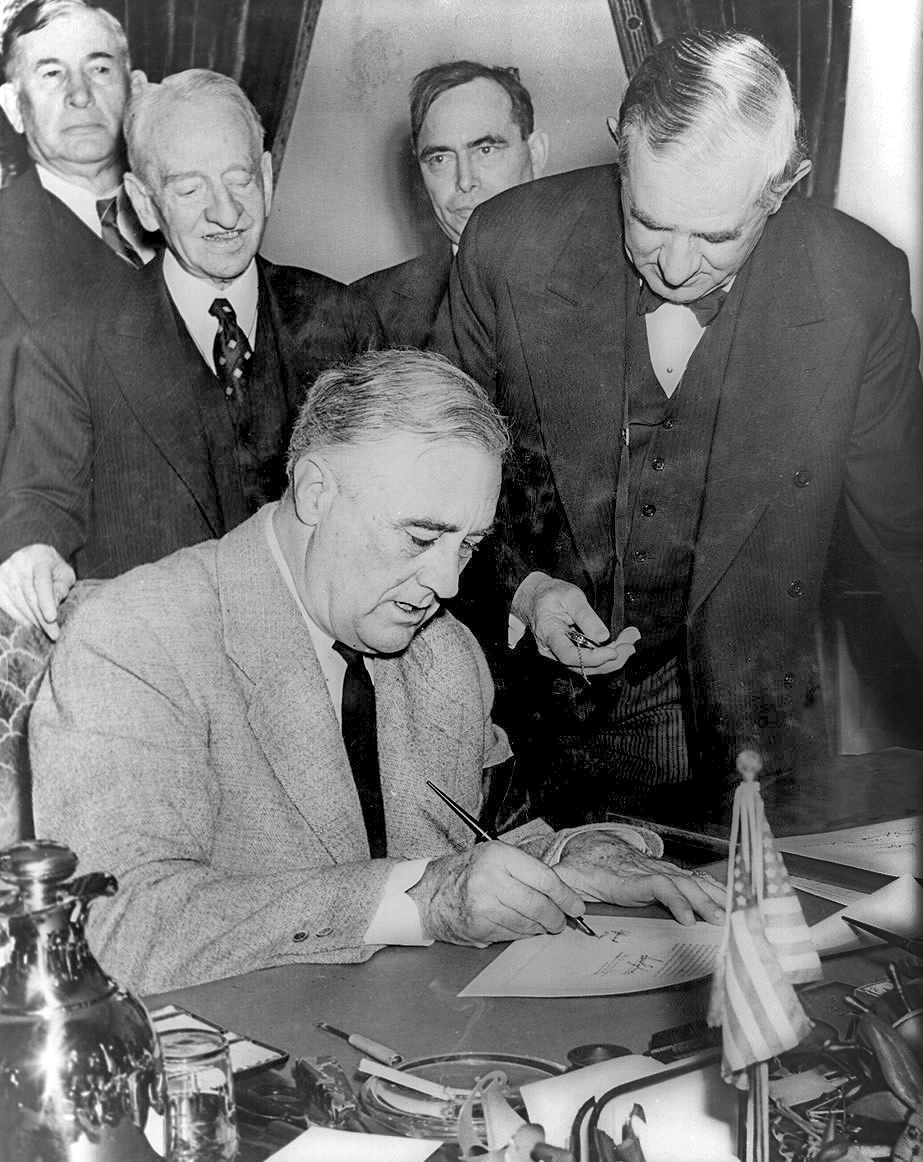
Hitler made a decision that sealed his fate. He declared war on America.

Four years before Pearl Harbor, Japanese planes sank an American gunboat.

The National Guard is older than the country it defends.

His last words were simple: 'Tis well.

The Constitution almost failed because it lacked these ten amendments.

In the snowy Ardennes, a quiet sector suddenly exploded.

The first airplane flight was shorter than the wingspan of a modern jet.

The storm killed more sailors than many battles did.

You could follow the army by the bloody footprints in the snow.

For the first time since 1947, America created a new military branch.

Three men became the first humans ever to leave Earth's orbit.

The Germans asked the Americans at Bastogne to surrender. The answer: Nuts!

King George reportedly said this act would make Washington the greatest man alive.

Five miles from France on Christmas Eve, more than 760 soldiers died.

Built for 12 passengers, a freighter rescued 14,000 refugees by Christmas.

The Revolution was nearly lost until one cold morning in New Jersey.

Thirty settlers defended Quakers they did not even share a faith with.

Of about 110 soldiers who marched out, only a handful lived.

A year before Pearl Harbor, Roosevelt told Americans their factories must arm freedom.

It was advertised as absolutely fireproof. It burned in minutes.

The ironclad that changed naval warfare could not survive a storm.
All 366 dates are included, including February 29. Unannounced dates are awaiting the show’s editorial schedule.